
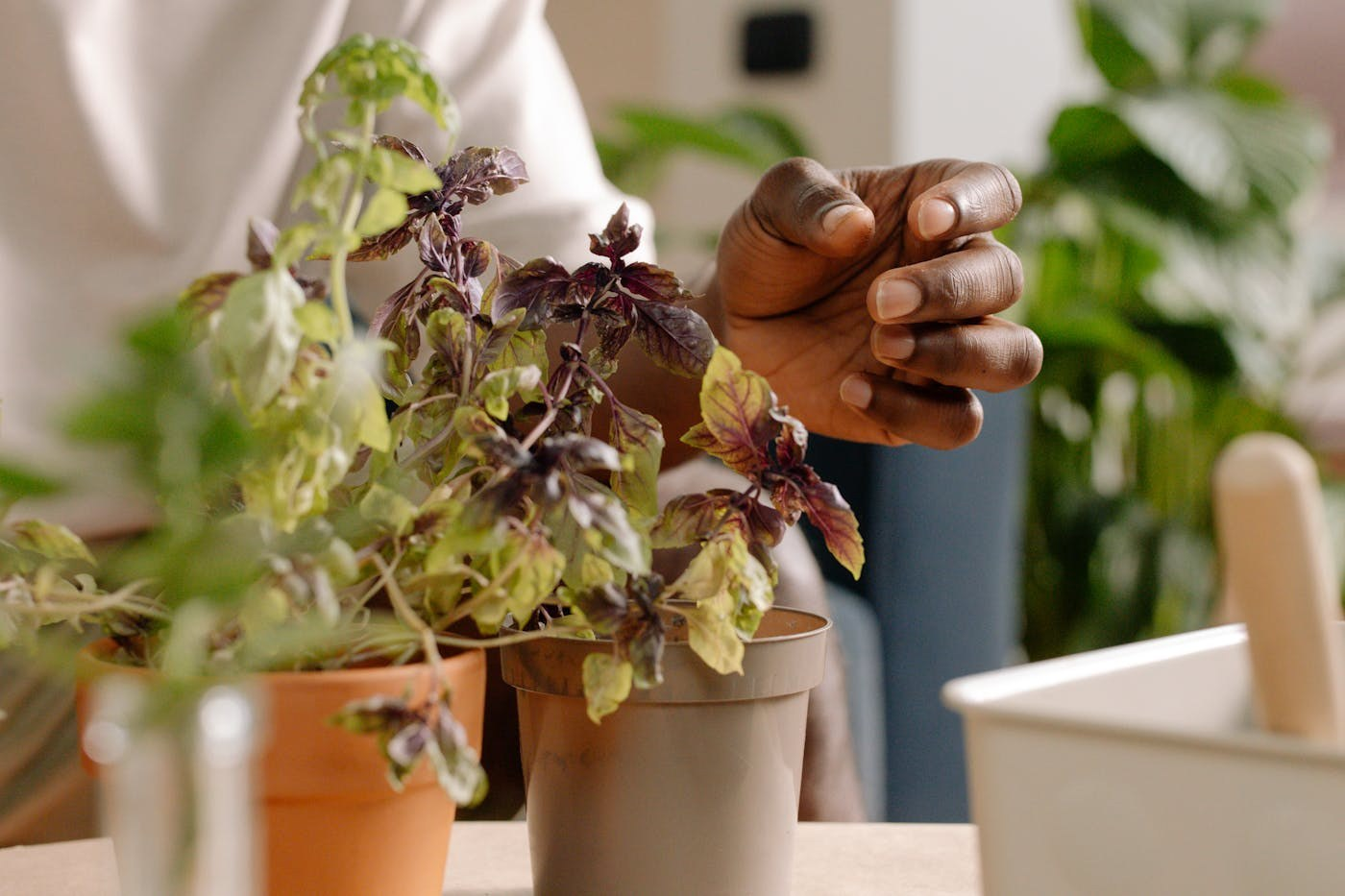
Fresh basil on your pasta. Mint in your evening tea. Rosemary on roasted potatoes — cut thirty seconds before dinner. If you’ve ever wanted that kind of kitchen-to-table freshness but you’re working with a studio apartment, a condo windowsill, or a countertop that’s already fighting for space, an indoor herb garden kit is one of the smartest investments you can make.
The problem? “Herb garden kit” covers everything from a three-pack of pots to a self-watering hydroponic system with built-in grow lights. Price range: $15 to $300. That’s a lot of ground to cover when all you want to do is grow basil without killing it.
This guide cuts through the noise with a straightforward Good, Better, Best breakdown — each tier chosen against the real constraints of small-space living: counter footprint, ease of use, light requirements, and whether it actually produces herbs you want to eat.
Affiliate Disclosure: HarvestSense.ai is a participant in the Amazon Services LLC Associates Program. We earn a small commission on qualifying purchases at no extra cost to you. We only recommend products we’d use in our own gardens.
📋 In This Guide
- Is an Herb Garden Kit Worth It?
- Do You Need a Kit With a Grow Light?
- Quick Picks by Budget
- Kit Comparison at a Glance
- Good — D’vine Dev Herb Garden Planter Set (~$20)
- Better — AeroGarden Harvest Lite (~$86)
- Best — Click & Grow Smart Garden 3 (~$124)
- Which Kit Is Right for Your Space?
- Quick Tips for Indoor Herb Success
- Indoor Herb Garden FAQ
- What to Read Next
Affiliate Disclosure: HarvestSense.ai is a participant in the Amazon Services LLC Associates Program. We earn a small commission on qualifying purchases at no extra cost to you. We only recommend products we’d use in our own gardens.
Is an Herb Garden Kit Worth It?
Short answer: yes — if you pick the right tier for your setup.
Growing herbs from scratch — buying seeds, choosing soil, figuring out drainage, sourcing grow lights — is absolutely doable, but there’s a real cost to the learning curve: failed starts, dead seedlings, and the time you spend troubleshooting what went wrong. A good kit front-loads the research for you. Everything is sized correctly, the lighting (if included) is tuned for herbs, and the growing medium is formulated to avoid the most common beginner mistakes: overwatering, poor drainage, and wrong pH.
For small-space growers specifically, kits also solve the footprint problem. You don’t have to guess whether a standard nursery pot will drain onto your countertop or whether a grow light will overpower a studio apartment. The kits covered here were chosen with that in mind — compact, clean-looking, and genuinely apartment-friendly.
That said, not every kit is worth buying. Some are cheap gimmicks with underpowered lights and soil pods that last one cycle before falling apart. We’ll call those out along the way.
Do You Need a Kit With a Grow Light?
This is the one question that decides which tier you should buy, and it has almost nothing to do with budget. It comes down to what your windows actually do.
Measure Your Light First
Herbs need 4–6 hours of direct sun to grow densely enough to harvest from. Direct means the sun itself is visible from where the pot sits — not a bright room, not a well-lit counter across from a window. Bright indirect light grows a plant that survives. Direct light grows one you can cut from every week.
Check it the cheap way: on a clear day, look at the spot where the kit will live at 9am, noon, and 4pm. If sunlight is falling directly on it at two of those three checks, a soil-and-sunlight kit will work. If it never does, you need a built-in light — no planter, however well designed, fixes a north-facing window.
What a Built-In Light Actually Buys You
An integrated light removes three variables at once. Intensity, because the LED is matched to the pod count. Duration, because a built-in timer runs 16 hours on and 8 off without you thinking about it. And distance, because the arm raises as the plants grow, keeping the light in its effective range. Rigging a standalone lamp over a planter can absolutely work and costs less — but you become the timer and the distance controller.
Both the AeroGarden Harvest Lite and the Click & Grow Smart Garden 3 include lights. The D’vine Dev set does not, which is exactly why it is the cheapest of the three and exactly why it is the wrong pick for a dim apartment.
Summer Complicates This
A south- or west-facing window that is perfect in March can cook a basil plant in August. Glass concentrates heat, and a pot pressed against it can run well above room temperature — enough to wilt herbs by mid-afternoon and push basil to bolt early. If your brightest spot is also your hottest, pull the pots back a foot or two from the glass through high summer and let a grow light make up the difference. This is the case where a lit kit earns its price twice over.
If you would rather supplement a soil setup you already own, our guide to grow lights for apartments covers standalone options from $32 to $299.
Quick Picks by Budget
🌿 At a Glance
- 🟢 Good (~$20): D’vine Dev Herb Garden Planter Set
Modern windowsill planters with drainage and saucers. Best for a sunny window and growers who want a clean, minimal aesthetic without electronics. - 🔵 Better (~$86): AeroGarden Harvest Lite
6-pod hydroponic system with a 20W grow light. Fastest growth, lowest maintenance, works in any light condition. - ⭐ Best (~$124): Click & Grow Smart Garden 3
Self-watering with a built-in grow light and smart soil technology. The most foolproof, design-forward option for set-and-forget herb growing.
Kit Comparison at a Glance
| 🟢 D’vine Dev Set | 🔵 AeroGarden Harvest Lite | ⭐ Click & Grow Smart Garden 3 | |
|---|---|---|---|
| Price | ~$20 | ~$86 | ~$124 |
| Plants at once | Depends on pots used | 6 pods | 3 pods |
| Grow light included | None | 20W full-spectrum LED | 6W full-spectrum LED |
| Growing method | Soil | Hydroponic | Smart soil, self-watering |
| Counter footprint | Windowsill scale | About 10 in wide | About 11 in wide |
| Watering | Every 1–3 days | Top up reservoir weekly | Every 2–3 weeks |
| Ongoing cost | Soil and seeds only | $15–25 per 6-pod refill | Pod refills, 3 at a time |
| Time to first harvest | 6–8 weeks from seed | 3–4 weeks | 4–5 weeks |
| Noise | Silent | Audible pump | Silent |
| Needs a sunny window | Yes — 4–6 hrs direct | No | No |
The short version: if the last row is a problem for you, the decision is already made. Skip the Good tier and choose between the two lit systems on pod count and how often you want to touch it.
🟢 Good — D’vine Dev Herb Garden Planter Set (~$20)
🟢 Good — D’vine Dev Herb Garden Planter Set (~$20)
A set of compact, modern herb planters with proper drainage holes and matching saucers — everything you need to start growing on a sunny windowsill, nothing you don’t. Clean matte finish, lightweight plastic construction, and a design that looks intentional rather than utilitarian.
This is the honest, no-frills option. The D’vine Dev set gives you well-designed planters built for herbs — the drainage holes and included saucers mean you’re not fighting root rot from the first watering. The lightweight plastic construction makes it easy to rearrange on a windowsill and won’t stress a floating shelf. No electronics, no subscriptions, no pods to reorder. Just planters that look good and drain correctly.
What You Get
A set of compact herb pots with drainage holes and saucers, in a clean matte white finish that works with most kitchen and countertop aesthetics. The lightweight plastic looks clean and modern — less rustic than terracotta, less formal than ceramic — and is far more resistant to chipping and cracking in everyday kitchen use. Dishwasher-safe for easy cleaning between growing cycles.
Best For
Growers who get at least 4–6 hours of direct sunlight per day (south- or west-facing windows), already have a sense of which herbs they want to grow, and want something that looks good enough to leave out permanently. If you’re starting from seed, pick up a quality potting mix formulated for herbs — not standard garden soil, which compacts too tightly in small containers and suffocates roots over time.
The Trade-Off
No grow light, no self-watering system, no seeds or pods included. This is a soil-and-sunlight setup. If your apartment faces north or gets inconsistent indirect light, your herbs will struggle — and that’s not a kit problem, that’s a physics problem. In that case, step up to the Better or Best tier where grow lights are built in.
🔵 Better — AeroGarden Harvest Lite (~$86)
🔵 Better — AeroGarden Harvest Lite (~$86)
A 6-pod hydroponic system with a 20W full-spectrum LED grow light, automated grow reminders, and a nutrient solution reservoir — no soil, no mess, and herb growth that’s genuinely 2–3x faster than soil-based alternatives. The gold standard for results-first herb growers in small spaces.
Hydroponics sounds complicated until you actually use an AeroGarden. The system handles almost everything: timed lighting (16 hours on, 8 off), automated nutrient reminders (you add liquid nutrients every two weeks), and a water level indicator so you never have to guess when to refill. The 20W LED is strong enough to support all 6 pods at full growth — and the adjustable arm goes up to 12 inches above the pod tray, which gives plenty of headroom for basil, mint, and most compact herbs.
What You Get
The AeroGarden Harvest Lite unit, a 6-pod herb seed kit (typically a gourmet herb mix — basil, chives, dill, thyme, Thai basil, and mint, though pod selection can vary by bundle), liquid plant food for the first growing cycle, and a 20W LED panel with full-spectrum output tuned for leafy herbs and greens. The footprint is about 10 inches wide — compact enough for a kitchen counter without dominating it. There are no soil messes to clean up, no drainage trays to empty, and no watering can required.
Best For
Anyone who cooks regularly and wants a meaningful, harvestable yield — not just a decorative pot or two. The AeroGarden Harvest Lite is also the right call if you’ve tried soil-based herb kits before and been frustrated by slow growth or wilting. Hydroponic systems deliver nutrients directly to roots without soil acting as a middleman, which is why the growth speed is so dramatically different: most herbs reach harvestable size in 3–4 weeks instead of 6–8.
It’s also worth noting this is the same AeroGarden Harvest family we highlight in our Indoor Edible Garden Guide as a foundational system — so if you’re building out a small-space food garden over time, this integrates cleanly into a larger setup.
The Trade-Off
Replacement seed pods cost $15–25 per 6-pack, and you’ll want to factor that into the ongoing cost. Bulk “grow anything” pods — blank pods you fill with your own seeds — are available and reduce the per-cycle expense significantly once you’re comfortable with the system. One other note: the grow light is bright. It’s designed to be. If this is going on a bedroom counter, the timed illumination cycle will be noticeable at night. A kitchen counter or home office is the better placement.
⭐ Best — Click & Grow Smart Garden 3 (~$124)
⭐ Best — Click & Grow Smart Garden 3 (~$124)
A self-watering, soil-based herb garden with a built-in LED grow light and patented smart soil technology. No guesswork on watering, no hunting for a sunny window, no nutrients to measure. The most hands-off, design-forward herb kit available for a countertop.
Click & Grow took a genuinely different approach with this system: instead of hydroponics, it uses proprietary “smart soil” plant pods with a passive wicking reservoir underneath. You fill the water tank every 2–3 weeks. The grow light runs on a built-in timer — 16 hours on, 8 hours off — and the arm is adjustable as your plants grow. It’s the closest thing to a set-it-and-forget-it herb garden that doesn’t require any nutrient measuring, water pump maintenance, or hydroponic troubleshooting. Smart soil handles the pH, aeration, and nutrient balance automatically.
What You Get
The Smart Garden 3 unit (available in white, beige, or charcoal), a water reservoir that holds roughly 3 cups, three starter basil plant pods, and a 6W full-spectrum LED grow light on an adjustable arm that extends up to about 14 inches. Replacement pods for basil, mint, thyme, rosemary, parsley, chives, and a rotating selection of seasonal herbs are available on Amazon. The system itself has no moving parts and runs silently — which matters in a small apartment, and which is a meaningful practical advantage over the AeroGarden’s water pump.
Best For
Design-forward apartment dwellers who want a countertop herb garden that looks intentional and functions effortlessly. The Smart Garden 3 is available in three finishes that work with modern, Scandinavian, and minimalist interiors — it’s an object you’d display, not tuck away. It’s also the right choice for anyone who travels occasionally and needs 2–3 weeks between watering attention, or who has killed herbs before and wants the most structured, guided growing system available. The soil-based approach also means flavor profiles that closely match garden-grown herbs — which some cooks find preferable to the slightly faster-growing but different-tasting results from hydroponic systems.
The Trade-Off
Three pods is genuinely limiting if you cook with variety. If you want basil and mint and rosemary and thyme growing simultaneously, you’ll either need a second unit or step down to the 6-pod Better tier. The 6W light is also on the lower end of the spectrum — it’s well-calibrated for the 3-pod footprint, but don’t expect to supplement it with plants outside the system. At $124, it’s the most significant investment in this guide; the AeroGarden Harvest Lite at $86 delivers more pods and faster growth, but the Click & Grow wins on design, simplicity, and the zero-nutrient soil approach.
Which Kit Is Right for Your Space?
Here’s the quick decision framework:
Choose the D’vine Dev set (Good) if you have a south- or west-facing window with 4–6+ hours of direct sun, you’re comfortable with basic soil gardening, and you want something that looks clean and modern without any electronics. You’ll save money, and the results can be excellent — herbs are forgiving in good light.
Choose the AeroGarden Harvest Lite (Better) if you want a meaningful yield from six herb varieties simultaneously, your windows are inconsistent or insufficient for soil-based growing, or you’ve tried and failed with soil-based kits before. The speed advantage is real: expect harvestable basil in 3–4 weeks. This is the best value-per-dollar pick in the guide.
Choose the Click & Grow Smart Garden 3 (Best) if design matters as much as function, you want the most hands-off possible growing experience (no nutrients, no pump maintenance), or you travel frequently and need a system that forgives gaps in attention. The silent operation, elegant aesthetics, and foolproof smart soil make this the premium pick for countertop herb growing.
All three options have one thing in common: they’re sized for real small-space living. None of them require a dedicated grow room, a greenhouse, or a south-facing wall of windows. They’re designed to fit where you actually live.

Quick Tips for Indoor Herb Success
Harvest early and often. The biggest mistake new herb growers make is waiting too long to harvest. Frequent trimming — cutting back to just above a leaf node — encourages bushier growth and delays bolting, which is especially important for basil. Once basil goes to flower, the leaves turn bitter. Keep cutting.
Don’t mix thirsty and drought-tolerant herbs. Basil and mint want consistent moisture. Rosemary and thyme prefer to dry out between waterings. If you’re using soil-based pots like the D’vine Dev set, group herbs with similar water needs together. It sounds like a small thing — it’s the difference between thriving and dying.
Watch for leggy growth. If your herbs are growing tall and thin with long gaps between leaves, they’re stretching toward light. That’s your signal to either move the pot closer to a window or add a grow light. Compact, bushy growth means the plant is getting enough light to focus on leaves rather than height.
For hydroponic systems, don’t skip the nutrients. The AeroGarden liquid nutrients aren’t optional — water alone won’t sustain herbs in a soil-free system for more than a few weeks. Follow the dosing schedule. It takes thirty seconds and it matters.
Rinse your reservoir monthly. For any self-watering or hydroponic system, a monthly rinse prevents algae and root rot. Five minutes of maintenance extends the life of the system by years.
Indoor Herb Garden FAQ
Which herbs are easiest to grow indoors?
Basil, mint, chives, and parsley are the forgiving four. They germinate quickly, tolerate imperfect light, and bounce back from a missed watering. Rosemary, thyme, and oregano are Mediterranean herbs that want dry, bright conditions and punish overwatering — worth growing, but not the ones to learn on. Cilantro is the trap: it grows fast, then bolts fast, and most people blame themselves rather than the plant.
Can I grow herbs indoors in a north-facing apartment?
Yes, but only with a grow light. A north-facing window never delivers direct sun, and herbs grown in that light go leggy — tall, pale, and thin, with long gaps between leaves. That is the plant stretching toward a light source that is not strong enough. Either of the lit kits here solves it outright.
Do I have to buy the branded seed pods?
No. Both AeroGarden and Click & Grow sell blank “grow anything” pods you fill with your own seeds, and they cut the per-cycle cost substantially. The branded pods are a convenience worth paying for on your first few cycles, while you learn what the system does. After that, blank pods and a packet of seed are the cheaper path to the same result.
Why did my basil suddenly taste bitter?
It bolted — sent up a flower stalk — and the plant redirected its energy from leaves to seed. Heat and long days both trigger it, which is why it happens most in mid to late summer. Pinch flower buds off the moment you see them, and harvest by cutting back to just above a leaf node rather than picking individual leaves. Frequent cutting delays bolting considerably.
How long does one of these kits last?
The hardware outlasts the plants by years. Herbs in a hydroponic or smart-soil system typically stay productive for 3–6 months before growth slows and it is worth restarting with fresh pods. The units themselves — LEDs, pumps, reservoirs — routinely run for many seasons, provided you rinse the reservoir monthly to keep algae and root rot out.
Is a hydroponic kit actually better than soil?
Faster, not better. Hydroponics delivers nutrients straight to the roots with no soil in between, so growth runs roughly twice as fast. Soil-grown herbs develop flavor more slowly and, to a lot of cooks, more fully. If yield and speed are the goal, hydroponic wins. If you care most about taste and want the quietest possible countertop, smart soil is the better fit.
What to Read Next
This guide covers the herb kit decision. For the broader edible indoor garden picture:
- The 2026 Indoor Edible Garden Guide — our hub article covering everything from microgreens to hydroponic systems for apartment and small-space growers
- Microgreens for Beginners — the fastest way to add fresh food to your kitchen, from seed to harvest in 7–14 days
And for related growing equipment and setup decisions:
- Vertical Hydroponic Towers for Apartments: A Hands-On Comparison — if the AeroGarden Harvest Lite has you interested in going bigger, this covers the full Good, Better, Best tier of apartment-scale hydroponic systems
- Best Grow Lights for Apartments (2026) — standalone grow light options from $32 to $299 for supplementing any soil-based herb setup
Questions about your specific setup? Send us a note — We read every message and try to respond to every genuine question about urban growing.