
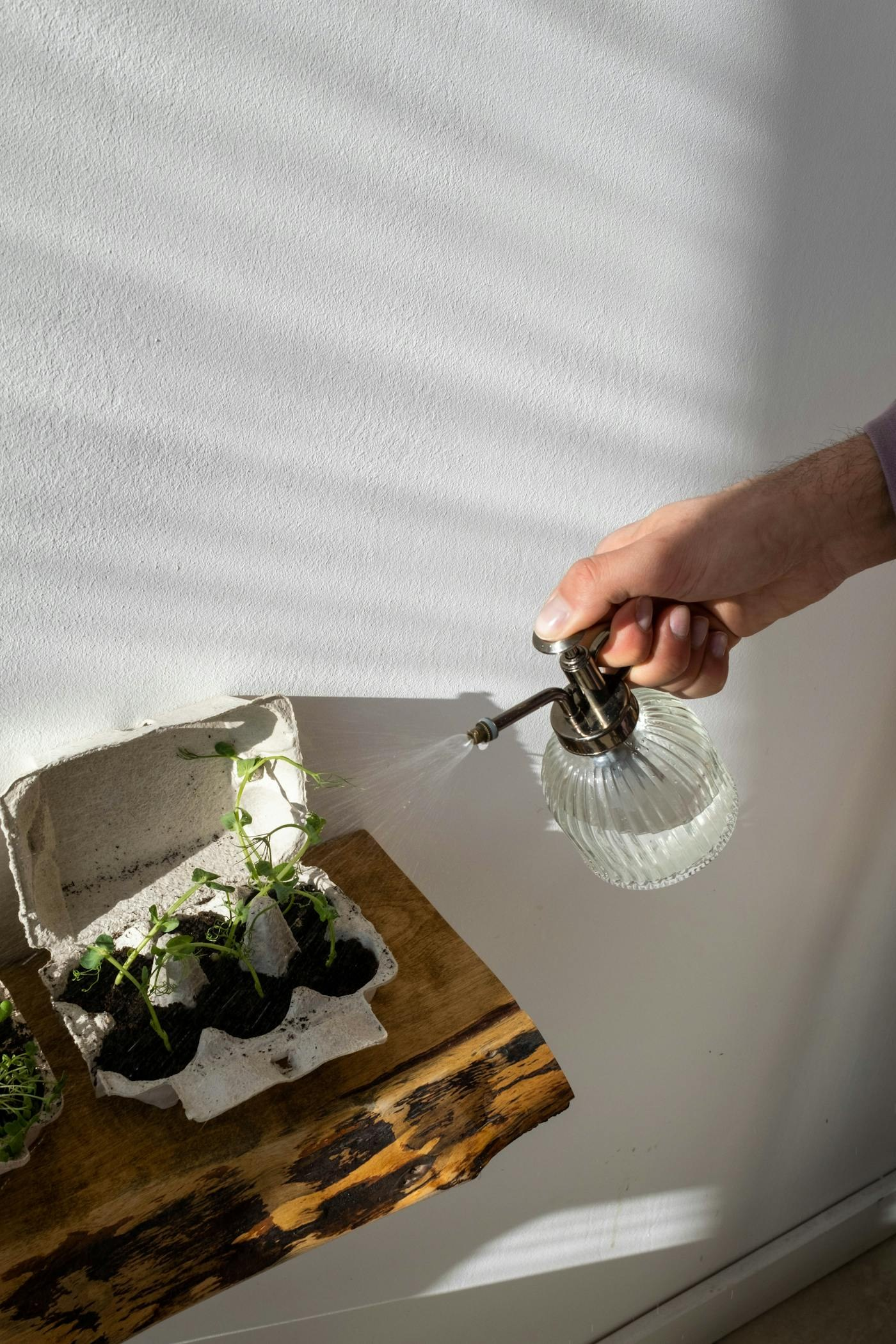
You’ve spent months getting your apartment garden dialed in — the right lighting schedule, the perfect watering rhythm, plants that are finally producing. Then a trip pops up and the whole thing feels fragile. Two weeks is a long time for a tomato plant to go without water.
The good news: there are solid solutions for every trip length and budget. A $15 terracotta spike can carry a single plant through a long weekend using a recycled wine bottle. A $45 programmable drip system can handle fifteen pots for two full weeks without you touching a thing. And a WiFi-connected smart watering system can monitor actual soil moisture and water automatically — while sending updates to your phone from across the country. This guide breaks down all three so you can match the right solution to your actual travel plans.
🟢 Good (~$15) — Weekend to 1 Week: Modern Innovations Terracotta Watering Spikes (4-Pack) — passive, no setup, eco-friendly
🔵 Better (~$45) — 1–2 Weeks: sPlant LCD Automatic Drip Irrigation Kit (15 Plants) — programmable timer, covers your whole apartment garden
⭐ Best (~$90) — 2+ Weeks or Frequent Travelers: RAINPOINT Smart WiFi Watering System + Soil Moisture Sensor — waters based on actual soil conditions, app monitoring from anywhere
- How Long You’ll Be Gone Changes Everything
- Before You Leave: The Vacation Prep Checklist
- Good Pick (~$15): Modern Innovations Terracotta Watering Spikes
- Better Pick (~$45): sPlant Automatic Drip Irrigation Kit
- Best Pick (~$90): RAINPOINT Smart WiFi Watering System
- Essential Accessories
- Lights and Temperature: The Other Two Variables
- Should You Ask a Plant Sitter?
- Where to Go From Here
How Long You’ll Be Gone Changes Everything
The biggest variable in any vacation watering plan isn’t the technology — it’s trip length. A long weekend is a completely different problem than two weeks in Europe. Getting clear on this first will save you from either overspending on a smart system you don’t need, or underpreparing with a few spikes when your garden really can’t go that long without a proper drink.
Here’s a rough framework: trips under a week can usually be handled with passive systems like terracotta spikes or a single good watering right before you leave. Trips of one to two weeks typically need a programmable drip system — something that actively delivers water on a schedule. Anything longer than two weeks, or if you travel frequently, is when a smart WiFi-connected system with real-time monitoring starts to pay for itself.
Plant type matters too. Succulents and drought-tolerant herbs like rosemary and thyme will forgive a week without water far more readily than tomatoes, basil, or anything in a small pot that dries out quickly. If your apartment garden is heavy on thirsty edibles — which is common if you’ve been following the high-rise food security playbook — plan conservatively. It’s much cheaper to buy a drip kit than to replace a productive plant pod set.
Before You Leave: The Vacation Prep Checklist
Whatever watering solution you choose, the following steps give your plants the best possible starting position. Do these in the 24–48 hours before you leave.
- Water thoroughly the night before departure. Give every pot a deep soak so the growing medium is at full field capacity. This gives your watering solution a head start and reduces how hard your system has to work on day one.
- Group plants together. Clustering pots creates a shared humidity microclimate that slows moisture loss. Move them away from air conditioning vents, which dry the air aggressively.
- Set your grow lights on a timer. If your grow lights aren’t already on a timer, get one before you leave. Lights running 24/7 while you’re gone will overheat your plants and accelerate soil drying. See our grow lights guide for timer recommendations.
- Harvest anything that’s ready. Don’t leave ripe produce on the plant. Harvest before you go — it reduces the plant’s resource demand and means you come home to a garden ready to produce again rather than overripe waste.
- Remove dead or yellowing leaves. Dead plant material can attract pests and mold, especially in a humid grouped cluster. A quick tidy before departure costs five minutes and saves headaches later.
- Test your watering system at least 24 hours early. Whatever device you’re using — spikes, drip timer, or smart system — run a real test before your departure day so you have time to troubleshoot anything that doesn’t work as expected.

Good Pick (~$15): Modern Innovations Terracotta Watering Spikes
For a long weekend or a trip of up to a week, you don’t need technology. You need porous clay and a wine bottle.
The Modern Innovations Ceramic Terracotta Self Watering Spikes (4-Pack) work through simple osmosis. You fill a recycled wine bottle with water, screw on the terracotta spike, and push it into the soil. Water moves slowly through the porous clay into the surrounding growing medium as the plant draws moisture out — it’s demand-driven, meaning the plant is essentially self-rationing. One bottle provides roughly 7 to 10 days of slow-release water, depending on pot size and how thirsty your plants are.
There’s a lot to like here. No batteries. No setup complexity. No app. No risk of a pump malfunction leaving water pooled on your apartment floor. The 4-pack covers four individual pots, which is enough for a focused herb collection or a small container setup. They’re also genuinely sustainable — you’re repurposing a bottle that would otherwise go in the recycling bin.
The limitations are real, though. These work best in medium to large pots where the clay can make full contact with moist soil. Small pots and plants in fast-draining mixes — like the coco/perlite blends commonly used in lightweight balcony container setups — will dry out faster and may need spikes topped off more frequently than a 7-day window allows. They’re also a one-plant-per-spike system: if you have fifteen pots, you’d need fifteen spikes and fifteen bottles lined up across your counter, which gets impractical fast. For larger gardens or longer trips, step up to the Better tier.
Best for: Weekend trips to 7-day vacations | Small to medium pot collections | Anyone who wants zero-tech, zero-risk simplicity
👉 Check current price on Amazon
Better Pick (~$45): sPlant LCD Automatic Drip Irrigation Kit
Once you’re looking at ten or more days away — or a garden with more than five or six pots — passive spikes start to feel underpowered. The sPlant LCD Automatic Drip Irrigation Kit is where automated watering becomes genuinely practical for apartment growers.
Here’s how it works: the kit includes a small pump, an LCD control unit, tubing, and up to 15 individual drip emitters. You set up the tubing to reach each pot, dial in a watering schedule on the LCD panel — frequency from twice daily to once every 30 days, duration from 5 seconds to nearly an hour — and connect to either 4 AA batteries or a USB cable. The pump draws from a reservoir you fill before leaving (typically a bucket or large container) and delivers water to each plant on your set schedule.
For an apartment garden of 10 to 15 pots, this is a meaningful step up from passive spikes. You configure it once, run a 24-hour test, and walk out the door. The LCD panel makes it easy to see what schedule is active at a glance, and the pump has enough head pressure to handle a reasonable vertical run — useful if your reservoir sits on the floor while some pots are on a higher shelf.
A few practical notes: the tubing setup requires some patience. Budget 30 to 45 minutes for first-time installation, and do it several days before departure so you can troubleshoot if needed. The drip emitters deliver roughly equal water to each plant, which works well for most situations — though if you have a large tomato and a small herb pot on the same system, you may want to run two emitters to the thirstier plant. Reservoir sizing is also on you: a 5-gallon bucket handles about 10 plants over 10 days, but scale up for larger gardens or longer trips.
Best for: 1–2 week vacations | Gardens of 5–15 pots | Growers who want reliable automation without app dependency
👉 Check current price on Amazon
Best Pick (~$90): RAINPOINT Smart WiFi Watering System + Soil Moisture Sensor
If you travel frequently, have a substantial garden with plants that are hard to replace, or want the peace of mind of actually checking in on your garden from wherever you are — the RAINPOINT Smart WiFi Watering System with Soil Moisture Sensor is a different category of product.
The key difference from the Better tier isn’t just WiFi connectivity — it’s that this system waters based on actual soil moisture readings, not a fixed timer. The sensor sits in your growing medium and measures soil conditions continuously. When moisture drops below a threshold you set, the system triggers a watering cycle. When soil is adequately moist, it holds off. This matters because a timer can’t know that your apartment got unusually warm during a heatwave, or that one pot is drying out twice as fast as another. A moisture-responsive system reacts to reality rather than assumptions.
The app component gives you something a drip timer fundamentally can’t: visibility. You can open the RAINPOINT app at any point during your trip and see current soil moisture levels, watering history, and reservoir status. If the sensor shows your basil is unexpectedly dry — maybe the reservoir ran low faster than expected, or an emitter clogged — you know immediately rather than coming home to a dead plant. You can also trigger a manual watering cycle remotely if something looks off.
Setup is more involved than the drip timer. You’ll need to connect the hub to your 2.4 GHz WiFi network (not 5 GHz — check your router settings if you run a combined network), position the soil sensor, and configure your alert thresholds in the app. Budget a full hour for first-time setup, and do it several days before your trip to confirm everything is reporting correctly and triggering as expected.
The system handles up to 15 plants via drip lines, similar to the Better tier kit. The jump in value is the monitoring layer and the moisture-responsive logic — you’re paying for intelligence and peace of mind, not just water delivery.
Best for: Trips of 2+ weeks | Frequent travelers | Growers with valuable or sensitive plants | Anyone who wants real-time app visibility while away
👉 Check current price on Amazon
Essential Accessories
BN-LINK 7-Day Programmable Outlet Timer (~$12): If your grow lights aren’t already on a timer, this is non-negotiable before any trip. Lights running continuously while you’re gone will overheat your plants, accelerate moisture loss, and run up your electricity bill for no benefit. The BN-LINK is simple, reliable, and widely used by indoor growers. Set it before you leave and don’t think about it again.
A basic soil moisture probe (~$10–15): Before departure, use a handheld soil moisture meter to confirm every pot is genuinely hydrated — not just recently watered on the surface. Surface soil can feel moist while deeper roots are dry. A probe gives you an accurate reading in seconds and is worth the quick sweep before any trip longer than a few days.
Lights and Temperature: The Other Two Variables
Watering is the most urgent vacation concern, but it isn’t the only one. Light and temperature can undermine a garden while you’re away just as reliably as a dry pot.
Grow lights: Put them on a timer. Full stop. The BN-LINK above handles this for around $12. Your plants need consistent light cycles — typically 14 to 16 hours for most edibles, though this varies by species. Leaving lights on continuously doesn’t help and actively stresses plants by disrupting their dark cycle. If you’re still dialing in your grow light setup, our Best Grow Lights for Apartments guide covers options from the $32 Barrina T5 up to the AC Infinity IONFRAME EVO3.
Temperature: Most common apartment edibles — basil, tomatoes, lettuce, herbs — are comfortable between 60°F and 80°F. If you’re leaving your AC set very low while the apartment is unoccupied (common for energy savings), verify it won’t drop below 60°F overnight; cold stress slows growth and can damage tropical varieties. Conversely, if you’re departing in summer without AC running at all, a hot apartment above 85°F will stress plants and dramatically increase water demand — a good reason to make sure your reservoir has extra capacity and your system is well-tested before you leave.
Should You Ask a Plant Sitter?
A trusted neighbor or friend checking in once during a long trip is never a bad idea, even with a drip system running. They can catch a clogged emitter, a tipped-over pot, or a reservoir that drained faster than expected — things no automated system can fix remotely.
If you ask someone, keep the ask minimal. Write a single clear card with the essentials: which reservoir to check and how full to fill it, which plants (if any) need anything beyond the automated system, and your phone number for questions. Most people are willing to stop by once during a two-week trip; asking for a complex daily watering schedule is how you strain friendships. The smarter approach is to use a plant sitter as a backup layer on top of a functioning automated system — your drip kit handles watering, your neighbor handles genuine emergencies.
Where to Go From Here
Vacation-proofing your garden is just one piece of a well-managed apartment growing setup. Here’s the rest of the Smart Garden Tech cluster:
- The 2026 Master Guide to High-Rise Food Security — the complete framework for apartment food growing, crop selection, and a 90-day startup roadmap
- Vertical Hydroponic Towers for Apartments: A Hands-On Comparison — self-contained systems with built-in reservoirs that need significantly less vacation prep than soil-based setups
- Best Grow Lights for Apartments (2026) — Good/Better/Best picks from $32 to $299, plus timer pairing recommendations
- Apartment Balcony Weight Limits: Your Safe Container Garden Guide — how to calculate safe loads and choose lightweight containers for your balcony
Have a question about your specific setup? Use the contact form — I read every message and try to respond to every genuine question about urban growing.